Offshore
How to Vet a Software Development Agency (15-Point Checklist)
17 Jun 2026 · 9 min read · The Contrast
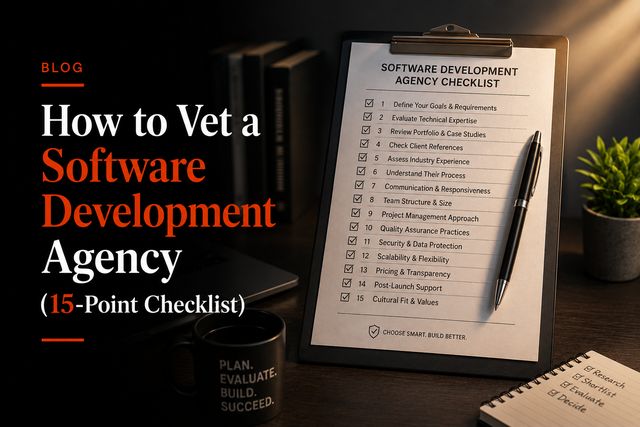
Knowing how to vet a software development agency saves you the most expensive mistake in software: hiring the wrong team and finding out three months in. The checklist below covers the four things that actually predict a good outcome, the people, the code, the process and the paperwork, in 15 concrete points you can run through before you sign anything.
Why vetting matters more than the pitch
Every agency looks excellent in a sales call. The deck is polished, the case studies are impressive, and the price sounds fair. None of that tells you what it is like when a deadline slips or a feature is harder than expected. Vetting is how you see past the pitch to the working reality. Spend a few hours here and you avoid months of pain later.
The people (points 1–4)
This is the single most important area. Agencies win work on senior names and deliver it with whoever is available.
- Who actually writes the code? Ask directly. If the answer is fuzzy, that is the answer.
- Can you meet the engineers? Insist on talking to the people who will build your product, not just an account manager.
- How senior are they, really? Ask about years of experience and what they have shipped, then check it against the work.
- Will the team stay stable? Frequent rotation means your product gets re-learned every few weeks.
When you meet the builders directly and they stay on your project, most other risks shrink. We go deeper on this in how to hire offshore developers.
The code (points 5–8)
You are buying software, so look at software.
- Can they show real code or repositories? Screenshots of finished apps are not enough.
- Do they write tests? Ask how they catch bugs before you do.
- How do they handle code review and quality? A real process, not "the senior checks it sometimes."
- Will you own the code and have access? You should be able to see the repository throughout, not just at the end.
If an agency is reluctant to show how they actually build, assume the worst. Good teams are proud of their craft and happy to talk about it.
The process (points 9–12)
How a team runs day to day decides whether the build is calm or chaotic.
- How do you communicate? Daily updates, a shared channel, regular demos, all of it should be clear up front.
- How do you handle scope changes? Every project changes. A mature team has an honest process; a weak one springs surprise invoices.
- What does a typical week look like? You want to hear about demos and decisions, not silence and a big reveal at the end.
- How do you deal with disagreement? Good engineers push back on bad ideas. Order-takers build the wrong thing perfectly.
The comparison below sums up what good and bad look like across these areas.
| Area | Good sign | Warning sign |
|---|---|---|
| People | You meet the engineers | Only account managers |
| Code | Repos, tests, reviews | Screenshots only |
| Process | Weekly demos, written updates | Long silences |
| Pricing | Transparent, billed as you go | Large upfront, vague scope |
The paperwork (points 13–15)
The contract is where you protect yourself from the costly surprises.
- Is the pricing transparent? You should understand exactly what you pay and when. We explain the hidden ones in the hidden costs of offshore development.
- Who owns the IP? Everything built must be assigned to you in writing.
- What are the exit terms? You should be able to leave with reasonable notice and take your code and credentials with you.
Be wary of large upfront payments and long lock-ins. A confident team bills for work as it happens because they expect you to stay by choice.
The test that beats every interview
After the checklist, run a small paid trial. Give the agency a real, contained piece of work, a single feature or a tricky bug, and judge what comes back. In two weeks you learn more than ten calls can tell you: Do they ask good questions? Is the code clean and tested? Did they hit the timeline they set? Did they flag problems early?
A team that does honest, communicative work on a small trial almost always does honest work on the full build. This is the cheapest insurance you can buy.
Red flags to keep front of mind
Some signals are serious enough to walk away over: refusing to let you meet the engineers, no references they can connect you with, pressure to pay a large sum upfront, and evasiveness about IP. We cover the full list in red flags when hiring an offshore dev team.
How we hold up to the checklist
We built our model around exactly these points. You talk directly to the senior engineers, not an account layer. The code, tests and repository are yours throughout. Pricing is transparent from around $20 an hour, billed as the work happens, with no large upfront lock-in. IP is assigned to you, and you can leave with your code whenever you choose.
If you want to put a team through this checklist, the simplest start is to look at what we actually do across our services and then book a 15-minute callback with a real person. Tell us your project and we will answer every one of these 15 questions on the call, and you can compare our full range of services against anyone else you are considering.
FAQ
Quick answers.
How do I vet a software development agency?
Check four areas: the people who will actually build your product, real code and references, how they run projects and communicate, and how they price and contract. A short paid trial on a real task confirms what the calls suggest.
What questions should I ask a software development agency?
Ask who writes the code, whether you can meet them, how they handle scope changes, who owns the IP, how they bill, and what happens if you want to leave. Vague answers to any of these are a warning sign.
Should I ask for a portfolio or references?
Both, and then verify them. A portfolio shows capability; a reference call tells you what the agency is like to work with when things get hard. Be cautious of agencies that cannot connect you with a single past client.
How do I check an offshore agency is legitimate?
Confirm the registered company, how long it has operated, that the engineers are real and meetable, and that the contract assigns IP to you. A paid trial is the cheapest way to test all of it at once.