Guides
How Long Does It Take to Build an MVP? A Week-by-Week Timeline
9 Jul 2026 · 7 min read · The Contrast
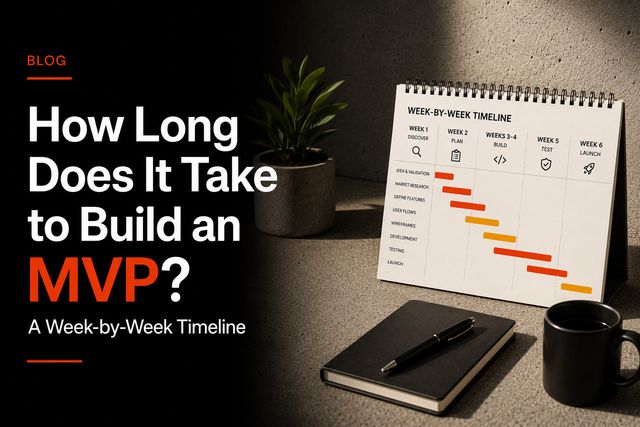
A focused MVP takes 6 to 12 weeks to build with a small senior team — around 6 to 8 weeks for a simple single-platform product, and closer to 12 once you add payments, multiple user types or a second platform. The timeline is driven by scope, not by how hard anyone is willing to push. Below is an honest week-by-week view of where the time actually goes.
The short answer
| MVP type | Typical scope | Realistic timeline |
|---|---|---|
| Simple | One platform, one user type, a few core screens | 6–8 weeks |
| Standard | Web + light mobile, payments, two user roles | 8–12 weeks |
| Complex | Multi-platform, real-time features, integrations | 12+ weeks |
These are working estimates, not a quote. The single biggest lever on the calendar is the same one that drives the cost of an MVP: how much you decide to build. Cut the scope and the timeline shrinks with it.
Week by week
Week 1 — Scope and setup
We turn your idea into a one-page scope: what's in, what's out, and what "done" means for the first release. In parallel we set up your repository, your cloud accounts and the project board — all in your name, so the work is yours from the first commit. By the end of week one you have a plan you can hold us to, not a vague promise.
Weeks 2–3 — Design and the first screens
Product and UI/UX design move ahead of engineering by a few days, so there's always a screen to build next. You see the core flows as real, clickable designs and approve them before we write the code behind them. The first working screens usually appear at the end of week two.
Weeks 3–8 — Build in milestones
This is the bulk of the work. Engineering runs in weekly milestones, each ending in a demo of software you can actually use. You approve each milestone before the next begins, so there are no invoice surprises and no six-week silence. A simple MVP finishes here; a standard one keeps going.
Weeks 8–11 — Integrations and hardening
Payments, third-party APIs, notifications and the edge cases get wired in and tested. This is where under-scoped projects slip, because integrations always take longer than the demo suggested. We test as we go rather than saving it all for the end.
Final week — Launch
We ship it to your app stores or your domain, hand over everything (it was in your accounts all along), and stay on for support. Launch is a milestone, not the end of the relationship.
What actually moves the timeline
The team's seniority sets the pace, but scope sets the length. In order of impact:
- Number of platforms. Web is one build. Web plus iOS plus Android is closer to three, and roughly triples the calendar for the same features.
- User types. Each distinct role — customer, admin, vendor — adds screens, permissions and testing.
- Integrations. Payments, maps, messaging and third-party APIs each add real days, not hours.
- Requirement clarity. The fastest projects are the ones where the founder knows the one thing they're testing. Fuzzy scope is the most common reason an 8-week build becomes 14.
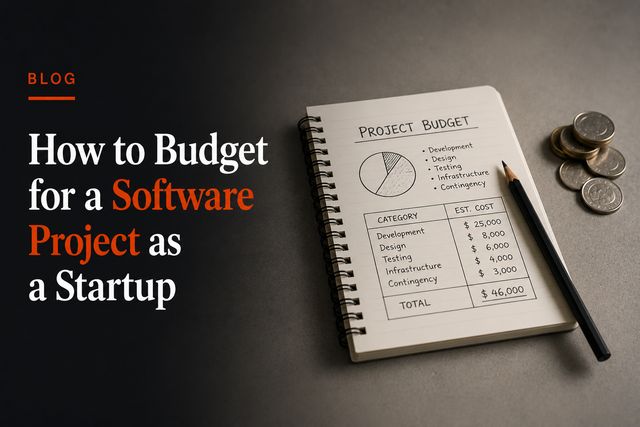
If you're weighing what to include against what to spend, our guide to budgeting a software project walks through the trade-offs, and you can move the sliders on our pricing page and calculator to see how scope changes both the number and the timeline.
How we keep it honest
You're billed weekly and you see working software every week, so you're never waiting months to find out whether a build is on track. If a change would push the timeline, we tell you the moment we see it — before the work starts, not at the invoice. That's the whole point of building in the open: the schedule is on the page, in black and white.
Bring us the one thing you want to prove, and we'll turn it into a week-by-week plan on the first call.
See our MVP development service →
FAQ
Quick answers.
How long does it take to build an MVP?
A focused MVP usually takes 6 to 12 weeks with a small senior team. A simple single-platform product can ship in 6 to 8 weeks; one with payments, multiple user types and a mobile app takes closer to 12. If a build is quoted at 6 months, the scope is probably too big to still be an MVP.
What makes an MVP take longer than expected?
Almost always scope, not speed. Extra user roles, a second platform, complex integrations and unclear requirements each add weeks. The fastest way to ship sooner is to cut features, not to push a team to work faster.
Can you build an MVP faster than 6 weeks?
Sometimes, if the scope is genuinely tiny and the requirements are already clear. Be careful of anyone promising a full product in days — that usually means templates, juniors or corners cut that cost you more later.
Do I need everything ready before you start?
No. You need a clear core idea and the one assumption you want to test. We turn that into a one-page scope in the first week, then build in weekly milestones you can see.