Guides
How Long Does It Take to Build an App?
28 May 2026 · 8 min read · The Contrast
A focused MVP app usually takes 6 to 12 weeks to build. A standard app with several features across two platforms takes 3 to 6 months, and a complex product can run longer. The biggest factor is scope, followed by how many platforms you support and the size and seniority of your team. Here is what actually shapes the timeline.
The honest timeline ranges
There is no single answer, but there are reliable bands. Most apps fall into one of these:
| App type | Typical scope | Indicative timeline |
|---|---|---|
| MVP | One platform, one user type, core feature only | 6–12 weeks |
| Standard | Two platforms, several features, payments | 3–6 months |
| Complex | Real-time features, integrations, multiple roles | 6 months or more |
These are estimates, not promises. The same app can take twice as long with unclear requirements or a team that hands work between layers. A clear scope and a small senior team are the surest ways to land at the fast end of each range.
What drives the timeline
Five things move the number more than anything else:
- Scope. Every feature is design, build and testing time. The shortest path is the smallest product that delivers the core value.
- Number of platforms. A single platform is one build. Web plus iOS plus Android is closer to three, unless you use a cross-platform approach.
- Integrations. Payments, maps, messaging and third-party APIs each add real work and testing.
- Custom design. A templated look is quick. A distinctive, considered interface takes design time before any code.
- Decision speed. A team can only move as fast as the founder answers questions. Slow feedback is one of the most common hidden delays.
You control most of these. Scope and decision speed are entirely yours, and they are where timelines are won or lost.
Phase by phase: where the weeks go
A typical app build moves through a few phases, often overlapping. Knowing where the time goes helps you plan and spot where to compress.
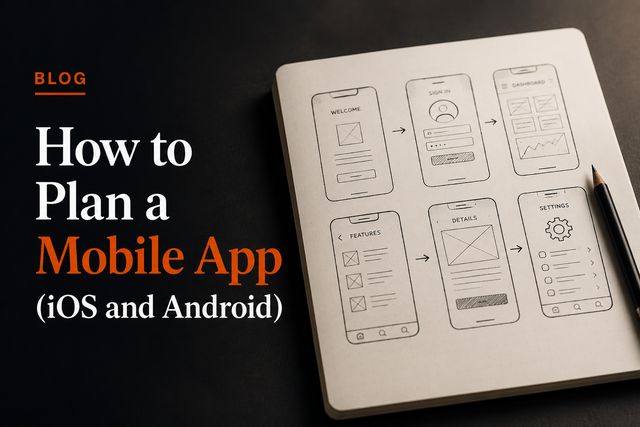
- Planning and design (1–3 weeks). Defining the core flow, mapping screens and agreeing scope. Time spent here saves far more later. We cover this in how to plan a mobile app.
- Core build (4–10 weeks). The bulk of the work: front end, back end and the main user flow.
- Integrations and polish (1–4 weeks). Payments, third-party services and refining the experience.
- Testing and launch (1–3 weeks). Quality checks, bug fixes and app store submission, which has its own review wait.
The app store review for iOS and Android adds days at the end that are outside your control, so plan for them rather than being surprised.
Why a smaller scope is the fastest lever
If you want the app sooner, the most powerful thing you can do is build less. An MVP exists to test whether people want the product, so it only needs the core feature. Cutting secondary features, extra user types and nice-to-have integrations can take a six-month plan down to ten weeks.
This is the same discipline behind building an MVP step by step: ship the smallest real product, learn from real users, then add the rest. Speed and learning come from restraint, not from rushing the engineering.
Why team size and seniority matter
Adding developers does not linearly speed up a build. Past a small team, coordination overhead grows and progress can actually slow. A few senior developers usually deliver faster and cleaner than a large group of juniors, because they write less code to solve the same problem and make fewer expensive mistakes.
Hand-offs are another quiet timeline killer. Every account manager or middle layer between you and the engineers adds delay and translation error. We keep that out of mobile app development: a small senior team, billed weekly, with you talking directly to the people building the app. A senior engineer with us starts at about $20 an hour, which keeps both the cost and the timeline predictable.
How the tech stack affects timeline
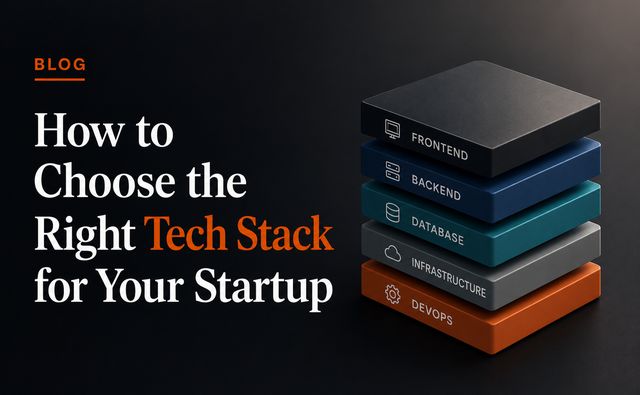
The stack you choose changes how long the build takes, especially on mobile. A cross-platform approach can deliver iOS and Android from one codebase, which is faster but trades off some native polish. A fully native build takes longer but can feel more refined. The right call depends on your product. We weigh the options in how to choose the right tech stack for your startup.
Getting a real timeline for your app
The fastest way to a real number is a short, specific conversation about your scope. A vague brief gets a vague estimate. Bring your core feature list, your platform choice and your launch goal, and the timeline tightens quickly.
That is how we work. The price is on the page before you commit, and a real person will give you a realistic schedule in a 15-minute call. If you want to see what a senior team can ship and how quickly, our mobile app development service is the place to start.
See our mobile app development service →
FAQ
Quick answers.
How long does it take to build an app?
A focused MVP usually takes 6 to 12 weeks. A standard app with several features and two platforms takes 3 to 6 months. A complex product can run longer. The biggest variable is scope, followed by how many platforms you support and the size and seniority of the team.
How long does it take to build an MVP app?
Most MVP apps ship in 6 to 12 weeks with a small senior team. If your plan runs much longer, the scope is probably too large to be a true MVP and should be trimmed to the core feature.
What makes app development take longer?
Extra platforms, more user types, third-party integrations, real-time features and custom design all add time. So do unclear requirements and slow decisions on the client side. Tight scope and quick feedback are the fastest ways to keep a build on schedule.
Can I build an app faster by adding more developers?
Only up to a point. Beyond a small team, coordination overhead slows things down rather than speeding them up. A few senior developers usually deliver faster than a large team of juniors.